
My Journey at DRDO Jodhpur: Where Research Meets Discipline
"Some experiences don't just teach you — they transform how you think, build, and aspire."
Introduction
As a computer engineering student passionate about artificial intelligence and deep learning, I always sought opportunities that challenged my limits — projects that combined research depth with real-world relevance.
That dream took shape when I was selected for a research internship at the Defence Research and Development Organisation (DRDO), Jodhpur — one of India's most prestigious research institutions dedicated to innovation in science and defense.
This experience became a defining milestone — one that reshaped how I viewed technology, responsibility, and purpose.
Getting Started
Receiving the official confirmation mail from DRDO was surreal. It was a moment of pride and anticipation — stepping into an environment known for world-class research and national impact.
After completing the required security and verification processes, I was assigned a machine learning–based project under the guidance of senior scientists. It focused on exploring advanced AI architectures and their real-world applications within constrained and high-integrity systems.
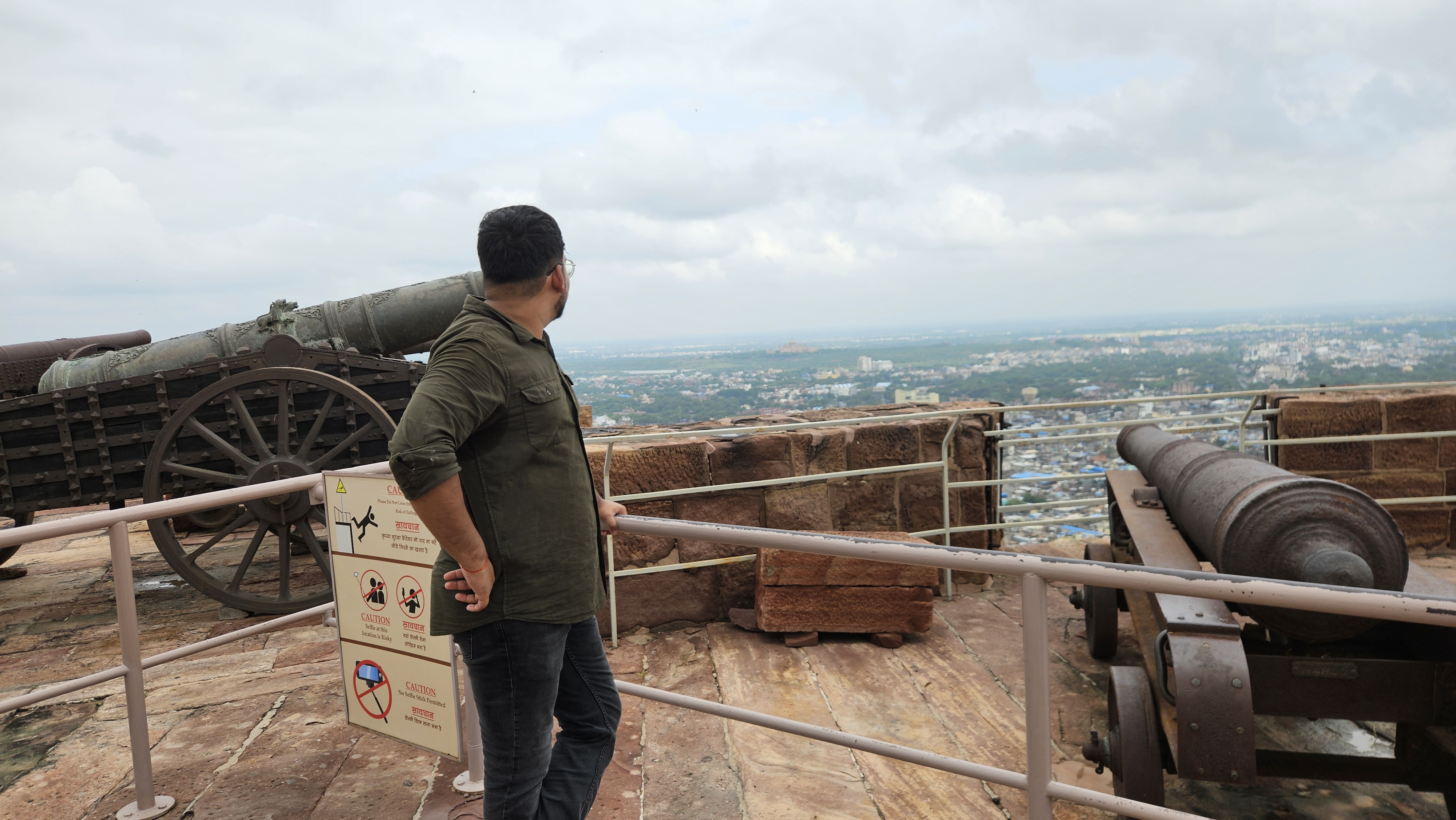
Mehrangarh Fort Jodhpur
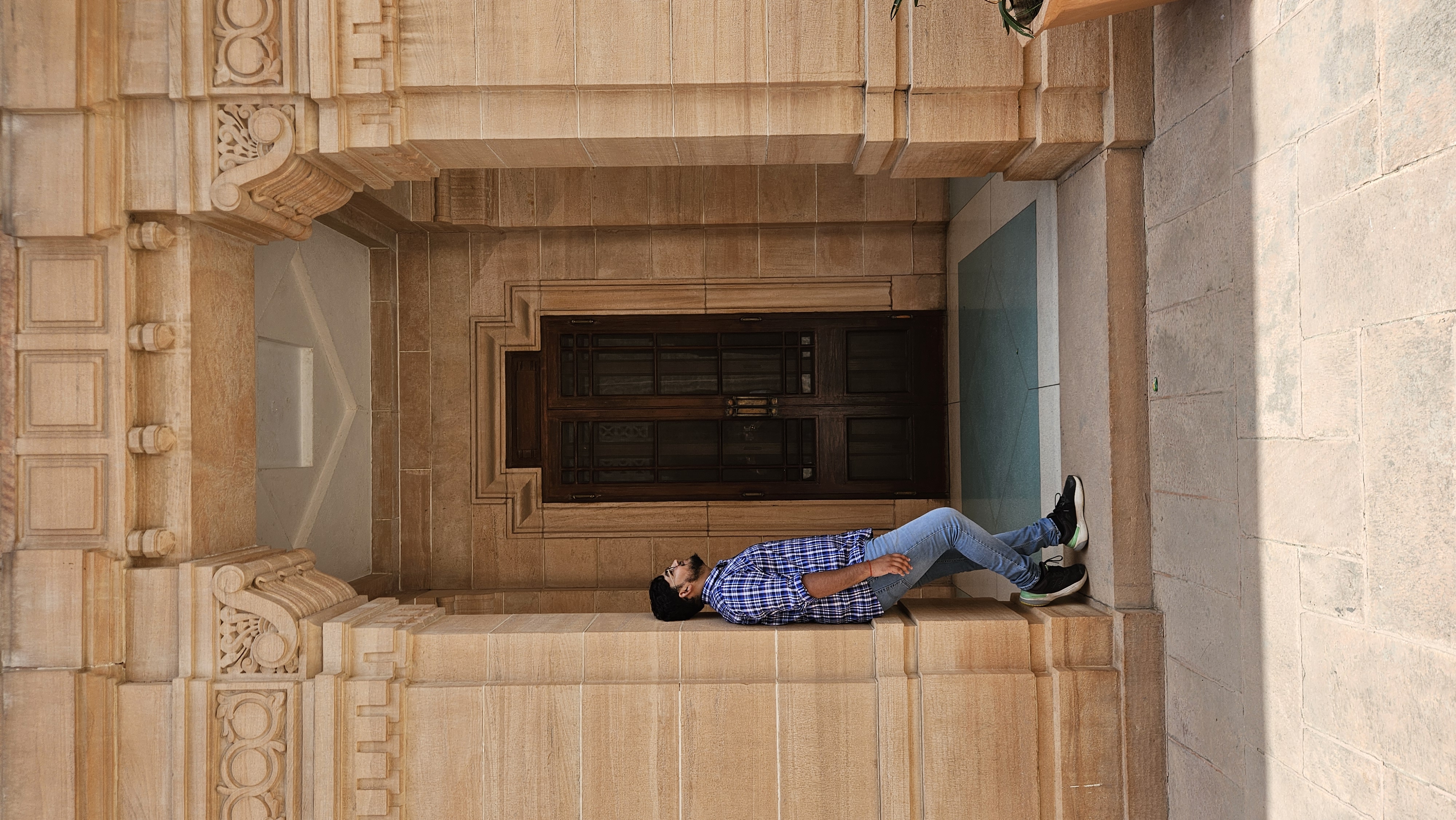
Umedh Palace Jodhpur
The Core Work
Due to confidentiality protocols, I cannot disclose project specifics — but my research direction centered around Generative Adversarial Networks (GANs), particularly CycleGANs used in image-to-image translation and domain adaptation.
This internship pushed me to explore the depths of neural architecture design, focusing on:
- Enhancing training stability of adversarial models
- Optimizing high-resolution image generation pipelines
- Managing dataset transformation and model convergence
- Conducting experiments in secure, research-grade environments
Every iteration taught me more about balancing theoretical models with practical system constraints, under the guidance of scientists who emphasized clarity, precision, and disciplined execution.
The Environment: Precision in Every Step
The DRDO research environment is built on discipline, documentation, and integrity. Every experiment required structured logs, verified data handling, and a well-documented approach — no shortcuts, no assumptions.
This disciplined workflow taught me that real innovation emerges from structured effort, not spontaneous inspiration.
Even the smallest improvement — whether in code optimization or model accuracy — carried immense importance.
Key Learnings
My journey at DRDO Jodhpur left me with lessons that go far beyond AI models:
1. Research demands patience
Training a deep learning model isn't just computation — it's observation, correction, and persistence.
2. Documentation is everything
Every experiment was logged and justified, teaching me the power of research reproducibility.
3. Balance theory and practicality
GANs may look perfect in papers, but real-world deployment demands adaptability and precision.
4. Work with humility and responsibility
Handling sensitive systems cultivates respect for process, data, and the purpose behind technology.
Growth Beyond Code
Beyond technical growth, DRDO taught me the researcher's mindset — to question assumptions, think deeply, and maintain clarity in complex scenarios.
Working alongside experienced scientists reshaped how I approach problem-solving — moving from "what works" to "why it works."
Each day, from code reviews to project discussions, was a lesson in professionalism, clarity, and focus.
Conclusion
My internship at DRDO Jodhpur wasn't just another academic requirement — it was a chapter that strengthened my belief in purposeful technology.
I walked in as a student eager to learn AI — I walked out as someone who understood how AI, research, and discipline converge to create lasting impact.
"At DRDO, I didn't just train models — I trained my mindset."
Final Words
For any student aspiring to work at DRDO or in research organizations — embrace it wholeheartedly. You'll not only refine your technical skills but also evolve as a thinker, a problem-solver, and a professional.
Looking back, the journey wasn't just about coding GANs or optimizing performance metrics — it was about understanding how technology can serve the greater good.